
A town built on a hill
Hydroseeding in Chapel Hill, NC
Lawn repair, new lawns and slope cover for Chapel Hill's hilly, wooded lots.
- No-cost visit to the lot, then a quote in writing
- Fescue, bermuda or zoysia picked for your light and the time of year
- Silt fence, grading and seeding handled together
Grass on the Hill
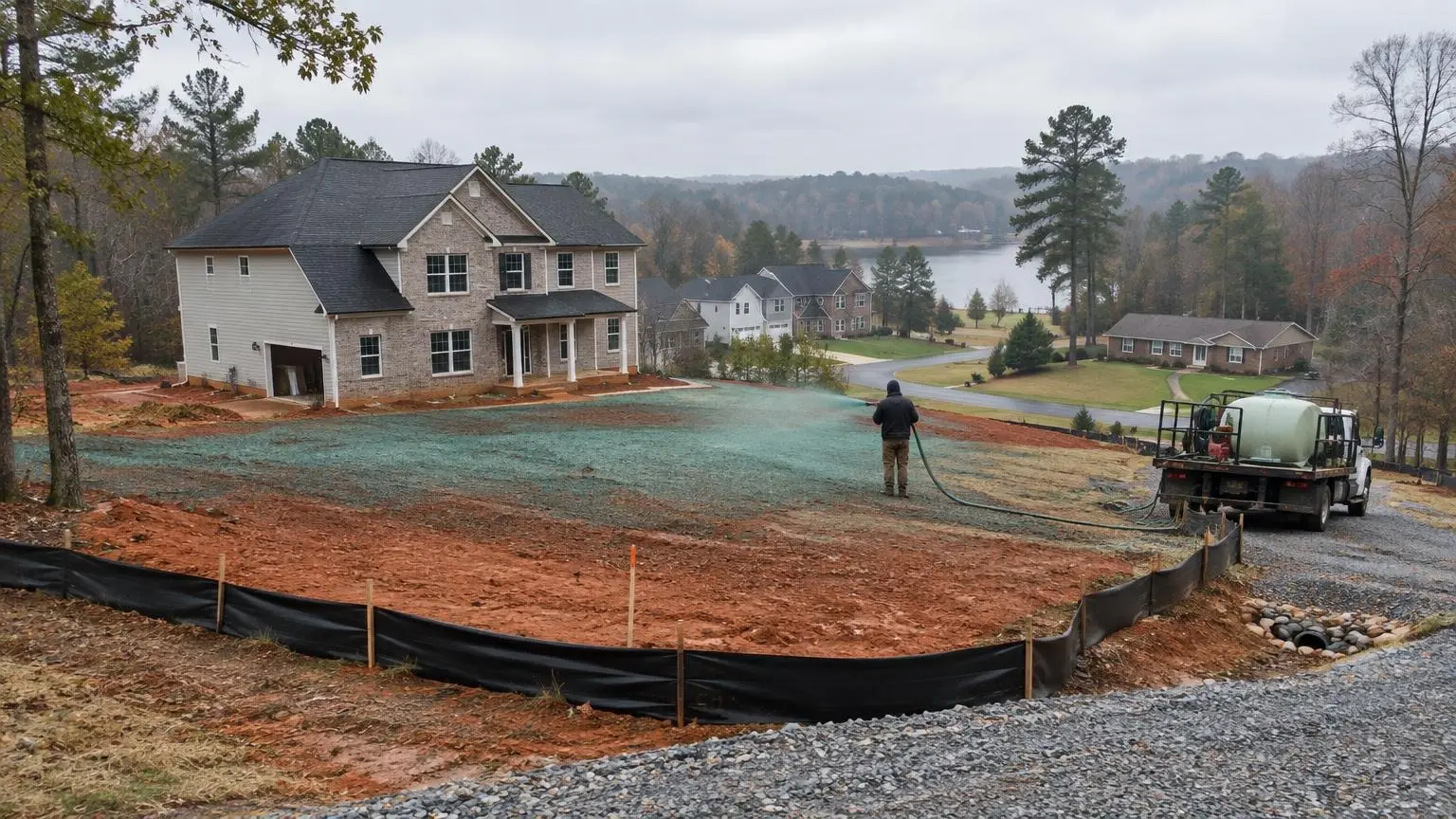
Hydroseeding in Chapel Hill deals with the hill the town is named for. Chapel Hill grew up along a hill whose crest held New Hope Chapel, built in 1752 where the Carolina Inn stands now, and many neighborhoods still slope away from the high ground toward creek valleys. Hillside yards shed water, and hydroseeding with a bonded mulch is one of the more reliable ways to get grass started on them.
More rain days than most of the Triangle
Chapel Hill averages about 48.9 inches of precipitation a year on roughly 124 days, but only about 2.8 inches of snow. Frequent rain keeps new seed moist, which helps, but steady rain on bare slopes also moves soil. We plan seeding so the mulch is in place before a wet week, not after.
Creek trails at the bottom of the slope
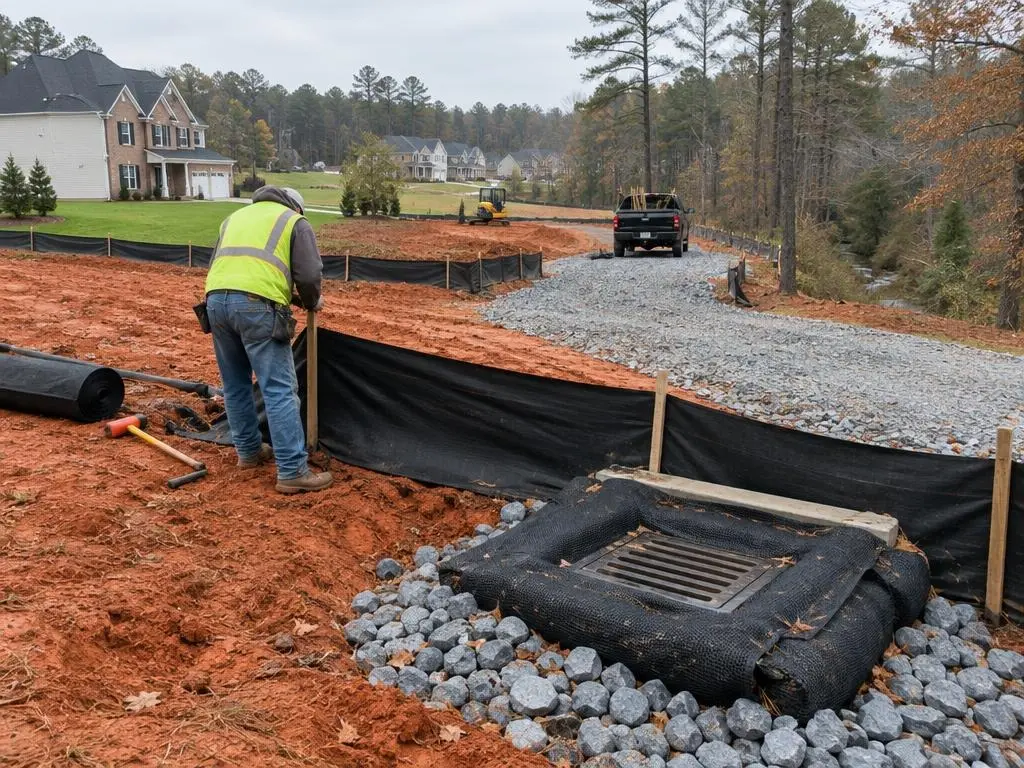
Bolin Creek Trail, the town's oldest and most popular greenway, and Morgan Creek Trail follow creek corridors through town. Homes above those creeks often have a wooded slope at the back. We recommend keeping trees on those slopes and seeding only where sun allows, with erosion control blankets on bare cuts.
Old shade, new neighborhoods
Where older lots are shaded by mature trees, lawn renovation usually means a shade-tolerant fescue mix and realistic expectations. Newer new-urbanist communities like Meadowmont and Southern Village tend to call for compact lawn areas, careful masking around walks and a clean hydroseed lawn installation.
University-driven land use
In 1792 Christopher Barbee gave the university trustees 221 acres, and the town was founded in 1819 to serve the university. Land use has followed the campus ever since, and it is why so many Chapel Hill lots are compact, older and tree-heavy.
Get a free estimate or call (919) 980-5784 for a look at your Chapel Hill yard.
Chapel Hill Facts for Lawn Work
- Hilltop town. Chapel Hill grew along a hill whose crest held New Hope Chapel, built in 1752 where the Carolina Inn now stands.
- Frequent rain. Average annual precipitation is 48.86 inches on about 124 days, with only 2.8 inches of snow.
- Creek greenways. Bolin Creek Trail, Chapel Hill's oldest and most popular greenway, follows a creek corridor through town.
- Campus land. Christopher Barbee gave the university trustees 221 acres in 1792; the town was founded in 1819 to serve UNC.
Chapel Hill Questions
Can you grow grass on a steep Chapel Hill backyard?
On moderate slopes, yes, with bonded mulch or a blanket. Very steep shaded banks may do better as groundcover.
Why does my lawn under the oaks keep thinning?
Shade and root competition. We overseed with shade-tolerant fescue and suggest thinning branches if you want more grass.
Does Chapel Hill's frequent rain help or hurt new seed?
Both. It keeps seed moist but can move soil, so we get mulch down before wet spells.
Do you work in Meadowmont and Southern Village?
Yes, both, along with older neighborhoods near downtown.
Hydroseeding Near Chapel Hill
- Hydroseeding in Raleigh, NC
- Hydroseeding in Cary, NC
- Hydroseeding in Apex, NC
- Hydroseeding in Holly Springs, NC
- Hydroseeding in Fuquay-Varina, NC
- Hydroseeding in Wake Forest, NC
- Hydroseeding in Rolesville, NC
- Hydroseeding in Knightdale, NC
- Hydroseeding in Wendell, NC
- Hydroseeding in Zebulon, NC
- Hydroseeding in Garner, NC
- Hydroseeding in Morrisville, NC
- Hydroseeding in Durham, NC
- Hydroseeding in Carrboro, NC
- Hydroseeding in Hillsborough, NC
- Hydroseeding in Clayton, NC
- Hydroseeding in Youngsville, NC
- Hydroseeding in Franklinton, NC
- Hydroseeding in Pittsboro, NC
- Hydroseeding in Creedmoor, NC
- Hydroseeding in Smithfield, NC